

EDT, EDP vs Extrait de Parfum: What’s the Difference?

When shopping for perfume, you’ve probably seen terms like Eau de Toilette (EDT), Eau de Parfum (EDP), and Extrait de Parfum written on the bottle. Many people assume the difference is simply about how long a fragrance lasts—but from a perfumer’s perspective, the difference goes much deeper than concentration alone.
These categories affect not only longevity, but also how a fragrance unfolds, feels on the skin, and expresses its character.
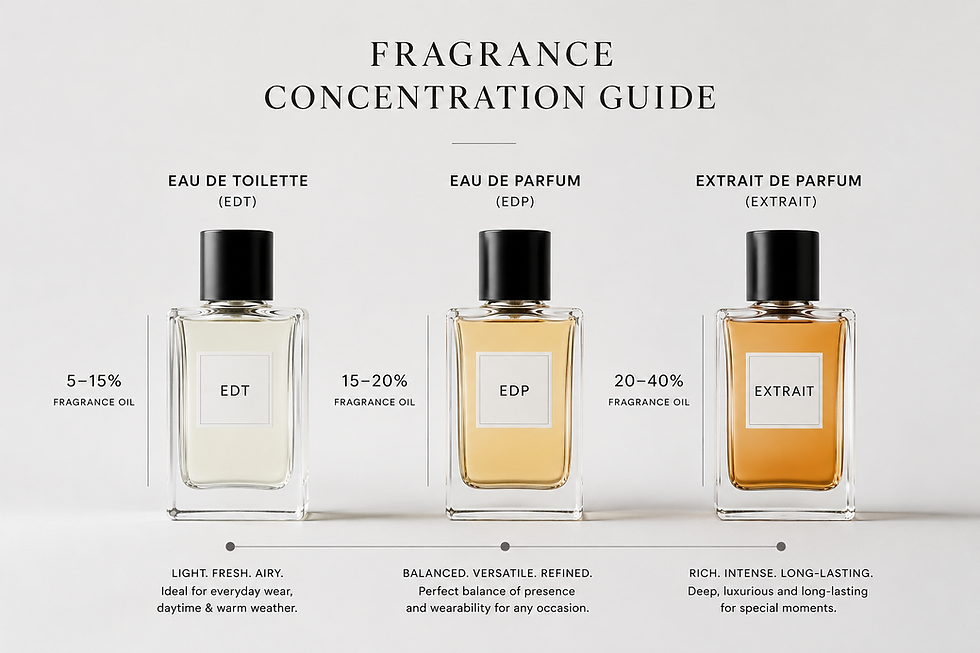
Eau de Toilette (EDT): Fresh and Airy
Eau de Toilette usually contains around 5–15% fragrance oil concentration. Because it has a lighter structure, EDTs often feel brighter, fresher, and more transparent.
From a perfumer’s point of view, EDT is beautiful for emphasizing sparkling top notes like citrus, aromatic herbs, tea, or aquatic accords. The scent tends to project quickly and feel energetic, making it perfect for daytime wear or hot climates.
However, because of its lighter concentration, the fragrance may evaporate faster and feel less dense on the skin.
Eau de Parfum (EDP): Balanced and Versatile
Eau de Parfum generally contains around 15–20% fragrance oil concentration and is the most versatile format in modern perfumery. This is where many perfumes achieve a balance between projection, richness, and wearability. The heart and base notes become more noticeable, allowing florals, woods, musks, and amber notes to develop more smoothly over time. As a perfumer, EDP often gives the best creative flexibility. It allows enough space for complexity while still feeling comfortable for everyday wear.
Extrait de Parfum: Rich, Intimate, and Deep
Extrait de Parfum is the most concentrated form, typically containing 20–40% fragrance oils. But higher concentration does not always mean “stronger” in projection.
In fact, many extrait perfumes sit closer to the skin while creating a richer, smoother, and longer-lasting scent experience. From a perfumer’s perspective, extrait is about depth, texture, and emotional presence. Ingredients like resins, musks, woods, vanilla, tobacco, and balsams often feel more luxurious and rounded in extrait concentration. The fragrance unfolds slowly, almost like fabric melting into the skin.
So, Which One Is Better?
There is no universal “best” concentration. It depends on the experience you want.
EDT feels fresh, light, and energetic
EDP feels balanced and versatile
Extrait feels deep, intimate, and luxurious
From a perfumer’s perspective, changing a perfume concentration is not simply adding more oil. Sometimes the entire formula needs to be adjusted because materials behave differently depending on concentration, evaporation, and skin interaction.
That is why the same perfume in EDT, EDP, and Extrait can sometimes feel like three different personalities of the same story.

Comments